
Letterboxd is the social network we accidentally got right
A small site for cinephiles, run from New Zealand, has become the rare social platform that still rewards thoughtful writing. The accident is worth studying.
There is one social network we have used continuously since 2014 without ever wanting to leave. It is run from New Zealand by people most of its users could not name. It is ostensibly for film, but it is really about what reviews and lists do for the way a person remembers their own taste.
The site is Letterboxd. It launched in 2011. It rates films from half a star to five stars, lets you write a review of any length, and shows you what your friends watched today. There are lists. There is an activity feed. There are no recommendation algorithms in the modern sense. There are no ads we have noticed. There are no influencers, exactly, although there are users with large followings whose writing happens to be good.
Most social products built in the last fifteen years have followed an identifiable curve. Launch with a focused idea. Accrue users. Monetise the users with attention. Dilute the focused idea to maximise the attention. The curve is so well known that there is almost no contemporary social platform we still use the way we did when we joined.
Letterboxd is the exception. The bones are unchanged since 2014. The improvements have been small.
What the product refuses to do
The list of things Letterboxd does not do is more interesting than the list of things it does.
It does not recommend. There is no "you might like" carousel. There is no algorithmic feed. The films you see in your feed are the films your friends logged today, in reverse chronological order. The site refuses to mediate between you and the people you have chosen to follow.
It does not push you to post. There is no notification telling you that your watchlist is feeling lonely. There is no streak counter. The site does not care if you log a film today, this week, or this year.
It does not optimise for engagement. The activity feed is finite. You see what your friends did. You scroll until it stops. There is no infinite well of strangers' content waiting underneath your friends'.
It does not gamify the writing. Reviews have no like-counter that decays with time. There is no boost for length. There is no algorithm rewarding a particular tone. A two-line joke review and a thousand-word essay sit on the same film page and compete on whether they are good.
The absence of these features is what makes the product work. The site is asking the user to bring the taste and provide only the infrastructure for recording it. Most platforms in 2026 try to substitute infrastructure for taste. Letterboxd does the opposite.
The half-star rating is load-bearing
The decision to rate films from half a star to five stars in half-star increments looks small. It carries more weight than it appears to.
Half-star granularity gives the rating ten possible values, which is wide enough to express real distinction but narrow enough that the rating cannot be confused for an objective score. A 7.4 on a hundred-point scale invites argument about whether it should be a 7.5. A three-and-a-half on a ten-step scale invites argument about whether the film moved you. The first argument is technical and tribal. The second is about taste.
The rating is also visible everywhere a film appears, which encourages the user to commit. You cannot half-engage with the site. To log a film at all you have to take a position on it. That commitment is what makes the average page valuable. A film's average rating on Letterboxd reflects the opinion of users who chose to rate it. IMDb top-line scores and Rotten Tomatoes audience percentages pool ratings from users who have not necessarily written or thought further about the film; Letterboxd averages tend to reflect users who took the rating seriously.
Lists are a native format
A list on Letterboxd is a film order with optional notes. Users build lists about every conceivable cross-section of cinema. "Films where a character eats a sandwich". "Films my mother forced me to watch." "Films I cannot believe were made in 1973." There are lists with two films and lists with a thousand.
The list is the unit on which Letterboxd writers do their best work. A good list is a curatorial argument. The format respects the form. There is no character limit on the description. The films can be sequenced for narrative reasons that have nothing to do with chronology. The list functions as an essay where the films do most of the talking.
The list is also durable. Lists from 2014 are still discoverable in 2026. They have not been buried by an algorithm. The Letterboxd archive accumulates steadily, without the boom-and-bust that algorithmic promotion produces elsewhere.
Why writing happens here
Reviews on Letterboxd tend toward a tone that is uncommon on other film sites. They are personal without being confessional. They are critical without performing the critic. The best of them treat the film as the occasion for a thought, rather than the thought itself.
Part of this is selection. Our impression, watching the platforms next to each other, is that users who want to be paid to write about film go to Substack or one of the trade outlets, users who want to be famous for writing about film go to Twitter or TikTok, and users who want to read what they thought of a film three years from now go to Letterboxd. The audience that filters into the platform is filtered for that intention.
Part of it is the design. A review is private to its writer in a way it is not on platforms where everything is performance. The reader audience for a Letterboxd review is small. Most reviews are read by a handful of people. The writer is, in practice, writing for themselves in three years. The tone reflects this.
The risk
The risk is acquisition. Letterboxd is small. It is profitable, by reports. It is the kind of asset a larger company might buy, and the acquirer's incentives would not obviously align with what makes it work.
If that ever happens, the danger is not that the site will be shut down. The danger is that the refusals we listed earlier get reversed one by one. Each of those changes would likely be defended on growth metrics. There is little reason to think those reversals would survive contact with the user base that made the site valuable in the first place.
Fifteen years in, the site has produced a real archive, a real community, and a writing culture that is rare online.
Sources
3 cited- 01 Letterboxd Year in Review 2024
Letterboxd · Report
Annual stats on member growth, top-logged films, and review activity.
- 02 How Letterboxd became Hollywood's new social network
Esther Zuckerman · The New York Times · May 22, 2023 · Article
- 03 The unlikely story of Letterboxd
Mia Sato · The Verge · Mar 15, 2023 · Article
You might also like
-
 Culture
Toy Story 5 passed $879 million. Two Pixar originals barely returned their budgets. That is the ledger.
Elio finished at $154 million on a reported $150 million production budget. Hoppers reached $389 million on the same. Toy Story 5 opened to a franchise-record $312 million.
-
 Culture
Brand New Day's trailer crossed a billion views in four days. That is a signal worth reading.
Brand New Day's first trailer set a record for the format in March 2026. Read against Thunderbolts and Fantastic Four's 2025 numbers, it points at a specific thing that still works.
-
 Culture
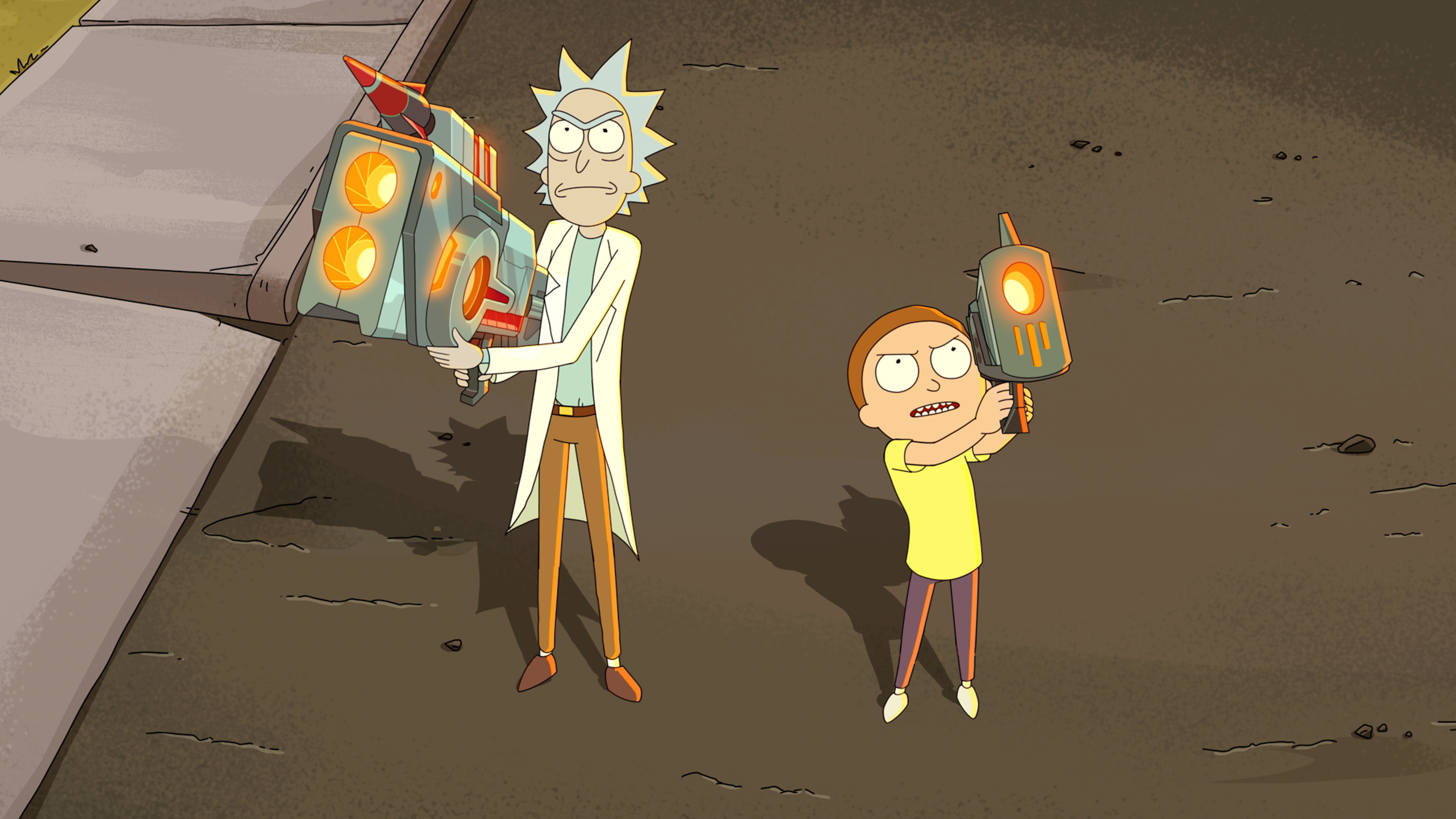
Rick and Morty marketed Season 9 as 'No AI slop.' That is a position.
The Season 9 tagline names AI-generated animation as the thing the show is not. That is rarer than it looks in 2026, and the implications are interesting whether you read it as principle or as positioning.
-
 Culture
The Backrooms grew up on YouTube. Hollywood is still adapting.
A teenager filming in his bedroom built one of the most influential new horror properties of the last decade. The studios noticed late. They are still figuring out what to do with what he made.