
Toy Story 5 passed $879 million. Two Pixar originals barely returned their budgets. That is the ledger.
Elio finished at $154 million on a reported $150 million production budget. Hoppers reached $389 million on the same. Toy Story 5 opened to a franchise-record $312 million.
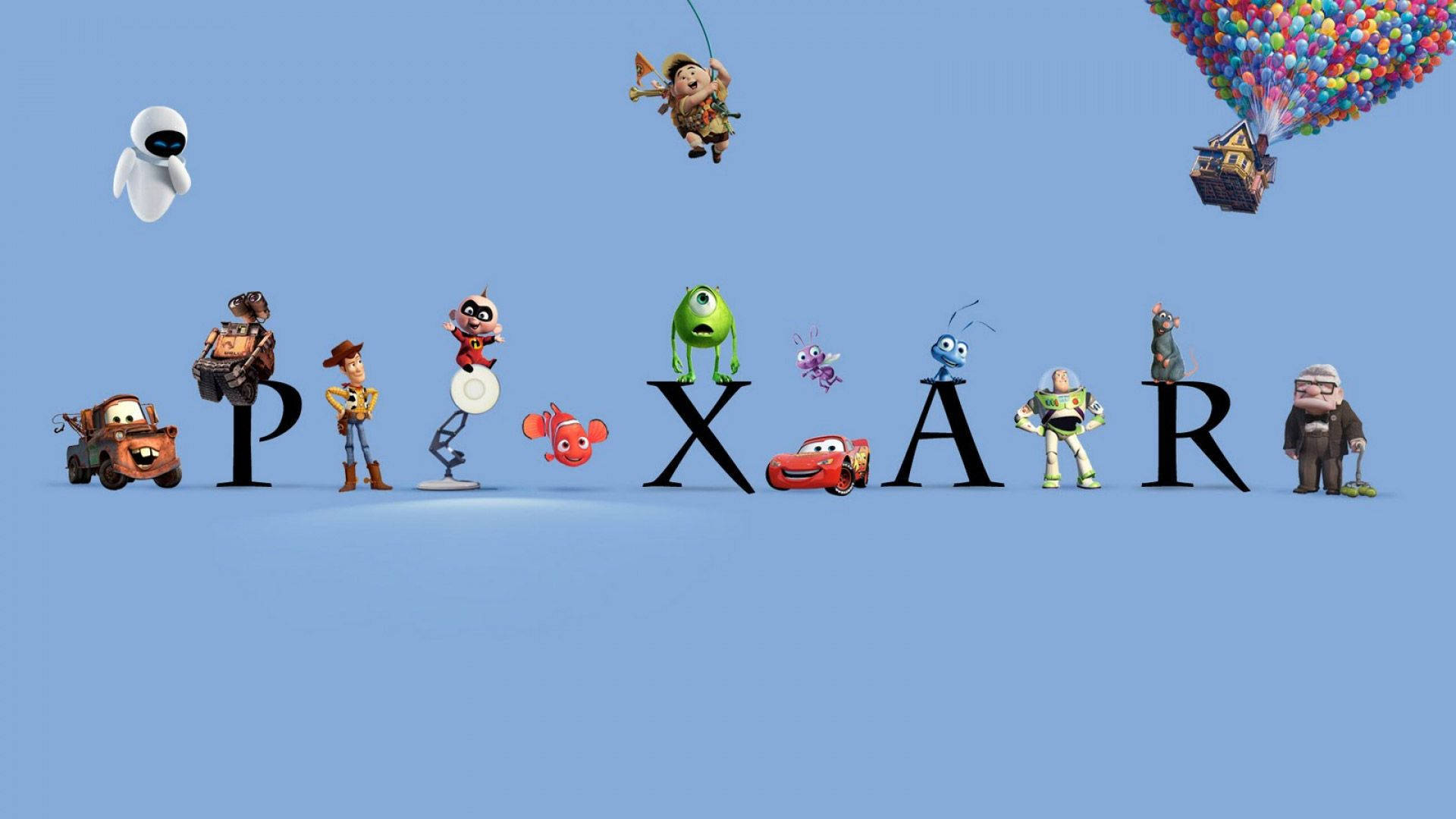
Two things happened at the box office this year. The first is that Toy Story 5 opened on the weekend of June 19 to 21, 2026 to $160 million domestically and $152 million internationally for a $312 million global debut, per The Walt Disney Company's own release, which described it as "the biggest opening weekend in franchise history, domestically, internationally, and globally." By July 12, per The Numbers, the film had accumulated $403.77 million domestic and $475.3 million international, for a worldwide total of $879.07 million. Collider reported the same day that Toy Story 5 was on pace to become the third Toy Story film to cross $1 billion.
The second is what happened to Pixar's two most recent originals. Elio opened on June 20, 2025 to $20.84 million, per Box Office Mojo, which Forbes reported at the time was the smallest opening in Pixar's theatrical history. It finished with $154.29 million worldwide. Hoppers, released in March 2026 on a reported $150 million production budget, opened to $90.6 million globally and reached $389.4 million worldwide by mid-July 2026, per The Numbers.
Read together, the ledger describes a sharp divergence between what Pixar's sequels and its originals returned in the same calendar year. It is also the most legible way to see what the studio's public strategy since May 2024 has actually meant.
The two originals, in Pixar's own accounting
Elio's production budget was reported at $150 million by The Numbers. The Hollywood Reporter, in a June 30, 2025 feature reporting former Pixar artists' account of the film's development, quoted an estimate that the true cost was "well north of $200 million" once marketing was included.
Disney's own quarterly filing tells the rest. The Walt Disney Company's fiscal third-quarter 2025 earnings release, dated August 6, 2025, reported that its Content Sales/Licensing and Other segment had swung to a $21 million operating loss from a $254 million operating profit in the same quarter a year earlier. The release named Elio among the quarter's theatrical releases and attributed part of the swing to "higher film cost impairments." Variety's Rebecca Rubin, covering the film's summer 2025 run, wrote that Elio would end up "a major money loser for Disney and Pixar."
Hoppers is the softer version of the same shape. Its $46.3 million domestic opening was the strongest for a Pixar original since Coco in 2017, per contemporary trade coverage. Forbes reported a 36 percent drop into its second weekend at $28.5 million. The final $389.4 million worldwide on a reported $150 million production budget clears the theatrical break-even figure commonly cited in the trade press of roughly 2 to 2.5 times production cost, but it clears it narrowly rather than comfortably.
Taken as a pair, Pixar's last two originals returned a combined $543 million worldwide on roughly $300 million in reported production spend. Elio's share of that combined total lost money on Disney's own accounting. Hoppers's share earned it back and a little more. The pair did not deliver the studio's usual multiples.
Toy Story 5 as the other side of the ledger
Toy Story 5 carried a reported production budget of $250 million, per The Numbers. Its domestic opening weekend alone was enough to cover the production cost.
The context for the number matters. Per Rotten Tomatoes Editorial's recap on June 21, 2026, Toy Story 5's $160 million domestic opening ranks as the second-largest animated opening ever, behind Incredibles 2's $183.6 million in 2018 and ahead of Inside Out 2's $154.2 million in 2024. The prior entry in the franchise, Toy Story 4, opened to $120.9 million domestic in 2019. Toy Story 3 finished with $415 million domestic. Toy Story 4 finished with $434 million. The franchise had grossed more than $3 billion worldwide before Toy Story 5 opened.
The sequel side, in other words, is not marginally outperforming the originals. It is delivering at a different order of magnitude, on a schedule the studio can plan against.
The 2024 restructuring set the pattern
The 2025 and 2026 divergence did not appear in isolation. It followed a documented restructuring at the studio level, with executives on record.
On May 21, 2024, Pixar laid off approximately 175 employees, about 14 percent of the studio's roughly 1,300-person workforce, per Variety and The Hollywood Reporter, in what both outlets reported as the largest reduction in Pixar's history. In an internal memo the same day, Pixar president Jim Morris told staff the studio was moving away from series production for Disney+ and refocusing on feature films. In a Bloomberg feature published May 30, 2024, Morris said he hoped Pixar would not release another feature film on Disney+ and that further streaming work should be series rather than movies.
Two weeks earlier, on Disney's fiscal second-quarter 2024 earnings call on May 7, 2024, Iger told analysts, per Blaze Media's transcript of the call, that "there's a lot of value in the sequels obviously because they're known and it takes less in terms of marketing." In a July 2023 CNBC interview from the Sun Valley conference, reported by Deadline on July 13, 2023, Iger said the three consecutive Pixar releases that went direct to Disney+ during COVID had created an audience expectation of streaming for Pixar films and reduced the theatrical urgency the studio had relied on before the pandemic.
The 2025 and 2026 ledger is the theatrical expression of a decision made in and around those months.
Pixar's own account of what changed
Pete Docter has served as Pixar's chief creative officer since 2018, succeeding John Lasseter. In a June 2024 Time interview tied to Inside Out 2, Docter said, "Part of our strategy is to try to balance our output with more sequels, so that we know we can rely on some of that for the box office, and then we can take chances on more originals... when we do [originals], people don't see it because they're not familiar with it."
In a Wall Street Journal profile reported March 7, 2026 by Variety and The Hollywood Reporter, Docter defended production changes made to Elio that former artists said stripped queer-coded material from the film. Docter's on-record line to the paper was "we're making a movie, not hundreds of millions of dollars of therapy." He added, "As time's gone on, I realized my job is to make sure the films appeal to everybody."
Andrew Stanton, who directed Toy Story 5 and serves as a Pixar Vice President, Creative per pixar.com, told Pixar Post in April 2026 that Toy Story 5 was "probably the last one I'm gonna do," while adding that the series could keep going without him.
We do not read those statements as confessions. They are the studio describing its own strategy in the terms the strategy was chosen in.
The wider originals ledger
Pixar is not alone in this pattern, and the pattern is not one where every animated original fails. Both parts matter.
The Hollywood Reporter has noted that only three animated originals from any Hollywood studio have opened above $20 million domestically in the post-pandemic era: Encanto at $27.1 million in 2021, Elemental at $29.6 million in 2023, and Elio at $20.8 million in 2025. All three were Disney releases. TD Cowen media analyst Doug Creutz told CNBC on June 26, 2025 that the gap between original IP and sequel performance in animation had "grown enormously wide" since the pandemic.
The counterexample worth naming is DreamWorks Animation's The Wild Robot. Adapted by Chris Sanders from Peter Brown's 2016 novel, the film grossed $334.5 million worldwide on a reported $78 million production budget after its September 2024 release, per Wikipedia's compilation of Box Office Mojo and industry press reporting. It earned an A CinemaScore, a 97 percent Rotten Tomatoes score, and three Academy Award nominations including Best Animated Feature. Studio Ghibli's The Boy and the Heron grossed roughly $294 million worldwide, opened at number one in North America on December 8, 2023 as the first original anime film to top the US and Canadian box office, and won Best Animated Feature at the 96th Academy Awards on March 10, 2024.
Per TheWrap's 2024 animation analysis, animated films accounted for more than $4.6 billion of the year's $8.5 billion global box office, with Inside Out 2 leading at roughly $1.69 billion. Most of the year's biggest animated hits were sequels. The Wild Robot was the notable non-sequel.
That is the shape of the wider ledger. An animated original can still work at feature scale. Fewer of them do. When they do, the returns are strong enough to matter. The pattern is not that originals are dead; it is that the distribution of outcomes for originals is wider and lower than the distribution for sequels, and Pixar, per its own executives on the record, is optimising against the difference.
What we would revisit
The Wild Robot's $334.5 million on a $78 million budget establishes that an animated original can still work at that scale outside a franchise. A Pixar original that replicates that ratio would be the first data point in the opposite direction since Elemental's slow theatrical recovery to $496 million worldwide, per Box Office Mojo.
Iger's stated logic on the May 2024 earnings call, that sequels "take less in terms of marketing," is a testable claim. A Pixar sequel that opens softly against tracking would put visible pressure on it.
Docter's own June 2024 Time interview described the sequel-heavy plan as a way to fund future originals. That framing leaves open the possibility of a return to originals if the theatrical audience for them can be shown to exist. The observable indicator would be a green-lit Pixar original with a marketing spend that matches the sequel marketing budgets of the same period. As of publication, no such project has been publicly confirmed on the studio's release calendar past Toy Story 5.
Two originals, one sequel, one calendar year. That is the ledger the studio has published. Whether the next entries look like these ones is the next thing worth checking.
Sources
19 cited- 01 Weekend Box Office: Toy Story 5 Secures Biggest Opening of the Year
Rotten Tomatoes Editorial · Jun 21, 2026 · Article
Confirms $160M domestic opening, $312M global, second-largest animated opening behind Incredibles 2 ($183.6M) and ahead of Inside Out 2 ($154.2M).
- 02 Toy Story 5 Opens to Franchise-Record $312 Million Globally
The Walt Disney Company · Jun 21, 2026 · Report
Primary source. Establishes the biggest-opening-in-franchise-history claim and the $160M/$152M/$312M split.
- 03 Toy Story 5 Box Office On Track for Billion-Dollar Milestone
Collider · Jul 12, 2026 · Article
Records the $880M worldwide total after two weeks.
- 04 Toy Story 5 (2026) box office data
The Numbers · Jul 12, 2026 · Dataset
Source for the $250M production budget and running totals ($403.77M domestic, $475.3M international, $879.07M worldwide as of July 12, 2026).
- 05 Elio (2025) release data
Box Office Mojo · Jul 13, 2026 · Dataset
Elio's $20,840,667 opening (June 20-22, 2025) and $154.29M final worldwide gross.
- 06 Elio Has Worst Opening Weekend Ever for a Disney-Pixar Movie
Tim Lammers · Forbes · Jun 22, 2025 · Article
Original framing for the worst-opening-in-Pixar-history language.
- 07 The Walt Disney Company Reports Third Quarter and Nine Months Earnings for Fiscal 2025
The Walt Disney Company · Aug 6, 2025 · Report
Documents the $21M operating loss in Content Sales/Licensing and Other, names Elio among the quarter's releases and cites higher film cost impairments.
- 08 Elio Directors Detail Pixar Cutting Queer Themes
The Hollywood Reporter · Jun 30, 2025 · Article
Records former artists' account of Elio's production changes and the well-north-of-$200M cost estimate.
- 09 Hoppers (2026) box office data
The Numbers · Jul 12, 2026 · Dataset
Source for $166M domestic, $223.4M international, $389.4M worldwide totals.
- 10 Hoppers Grosses $28.5 Million at Domestic Box Office in Second Weekend
Zachary Folk · Forbes · Mar 15, 2026 · Article
Records the 36 percent second-weekend drop.
- 11 Pixar Hit With Layoffs as 175 Staffers Cut
Variety · May 21, 2024 · Article
Primary source for the 175-person, roughly 14 percent workforce reduction and the Jim Morris memo.
- 12 Pixar Layoffs Hit Storied Animation Studio
The Hollywood Reporter · May 21, 2024 · Article
Corroborates the layoff figures and Pixar's exit from Disney+ series production.
- 13 Disney Q2 2024 Earnings Call: Bob Iger on Sequels
Blaze Media · May 8, 2024 · Article
Records Iger's line that sequels 'take less in terms of marketing.'
- 14 Pete Docter on the Stakes of Inside Out 2
Time · Jun 11, 2024 · Interview
Source for Docter's more-sequels strategic statement.
- 15 Pete Docter on the Elio LGBTQ Cuts
Variety, reporting the Wall Street Journal · Mar 7, 2026 · Article
Records Docter's on-record appeal-to-everybody framing.
- 16 Pixar's Elio Is Emblematic of a Bigger Headwind for Hollywood
CNBC · Jun 26, 2025 · Article
Source for TD Cowen analyst Doug Creutz's grown-enormously-wide quote on the originals-vs-sequels gap.
- 17 The Wild Robot
Wikipedia · Sep 27, 2024 · Report
Counterexample source. $334.5M worldwide on $78M budget, 97 percent Rotten Tomatoes, A CinemaScore, three Academy Award nominations including Best Animated Feature.
- 18 The Boy and the Heron
Wikipedia · Mar 10, 2024 · Report
Second counterexample source. Approximately $294M worldwide, first original anime film to open at number one in North America, Best Animated Feature at the 96th Academy Awards.
- 19 Why 2024 Was the Biggest Year for Animation
TheWrap · Dec 1, 2024 · Article
Records the $4.6B animation share of the 2024 global box office and Inside Out 2 at roughly $1.69B.
You might also like
-
 Culture
Brand New Day's trailer crossed a billion views in four days. That is a signal worth reading.
Brand New Day's first trailer set a record for the format in March 2026. Read against Thunderbolts and Fantastic Four's 2025 numbers, it points at a specific thing that still works.
-
 Culture
Rick and Morty marketed Season 9 as 'No AI slop.' That is a position.
The Season 9 tagline names AI-generated animation as the thing the show is not. That is rarer than it looks in 2026, and the implications are interesting whether you read it as principle or as positioning.
-
 Culture
The Backrooms grew up on YouTube. Hollywood is still adapting.
A teenager filming in his bedroom built one of the most influential new horror properties of the last decade. The studios noticed late. They are still figuring out what to do with what he made.
-
 Culture
Gravity Falls ended in 2016. It has been continuing ever since.
The finale aired on Disney XD ten years ago. Since then Gravity Falls has produced three New York Times bestsellers, an international scavenger hunt, a decade of ciphers, and a franchise in continuation talks.