
CD Projekt is going back to The Witcher 3, eleven years later
Songs of the Past is the third expansion to a 2015 game. The decision shape is more interesting than the decision itself, and worth examining on its own terms.
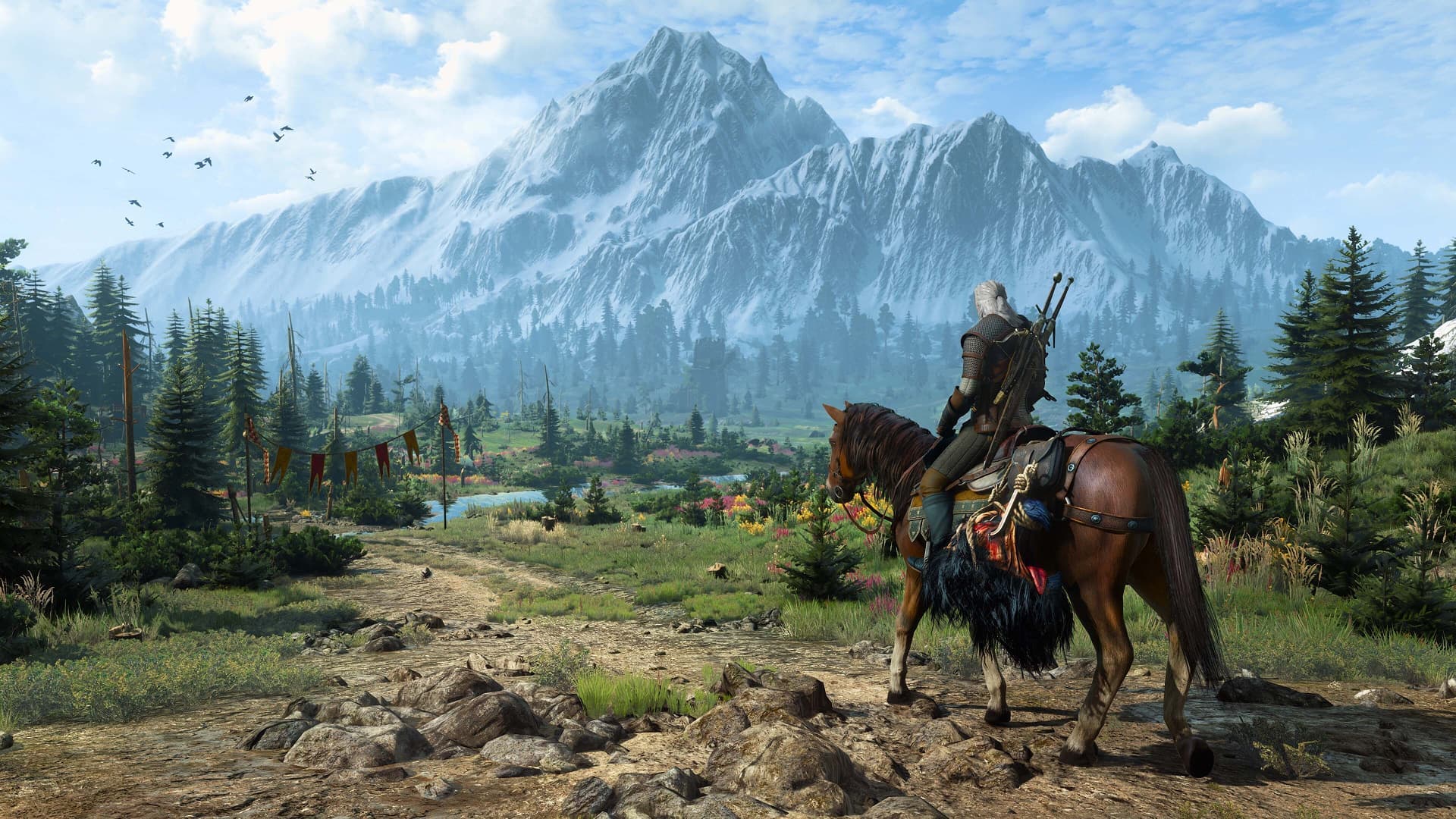
The Witcher 3 launched in May 2015. Its second expansion, Blood and Wine, launched in May 2016 and was understood at the time as a closing statement on the game's storyline. CD Projekt Red moved on. The studio shipped Cyberpunk 2077 in 2020, spent four years repairing it, shipped the Phantom Liberty expansion in 2023, and began full-scale production on The Witcher 4. The Witcher 3 has been done for ten years by any reasonable definition.
In May 2026, CD Projekt Red announced Songs of the Past, a third paid expansion for The Witcher 3, launching in 2027. It is being co-developed with Fool's Theory, a studio largely staffed by ex-CDPR veterans who shipped the original game. Geralt of Rivia is the protagonist. More details arrive in late summer 2026.
What does not normally happen
The default behaviour of a major studio after finishing a game is to move on. The team rotates onto the next project. The marketing budget moves with them. The legacy game gets a maintenance patch every few years and occasionally a remaster, and otherwise sits in the catalogue as a back-catalog asset that continues to generate revenue without anyone needing to do new work for it.
Returning to a finished game with new paid content, eleven years after launch, is a thing publishers can do but almost never do. The reasons are economic. A new expansion competes for budget with the publisher's flagship in-development title. The team that originally built the game is mostly gone or working on other things. The audience is not guaranteed to follow back. The production overhead of bringing a 2015 engine and asset pipeline back into active development is non-trivial. The expected revenue per dollar invested is lower than from a new IP that can be marketed fresh.
The studios that do return tend to do so via remasters, which are cheaper to make, lean on nostalgia rather than new design work, and sit at a lower price point. Songs of the Past is not a remaster. CD Projekt has been clear that it is a new adventure with new content, in the original engine, with a new development team partnership.
This is not a category of decision we see often. We can list the recent peers on one hand. Bethesda has shipped post-launch content years after Skyrim. Larian shipped patches and definitive editions for Divinity: Original Sin years post-launch. Capcom occasionally reanimates a Monster Hunter expansion. None of these maps cleanly onto a third paid expansion eleven years after the base game shipped.
Why CD Projekt can make it work
The studio's incentive structure is specific and the specifics matter.
We think it is useful to split CD Projekt Red's audience three ways: people who played The Witcher 3 in 2015 and 2016, people who came to it later via the Netflix show and the discount cycles, and people who played Cyberpunk 2077 and have since become broadly invested in the studio's work. All three audiences overlap. A share of that first audience has replayed the game more than once, and CDPR is betting they will pay for new content in the same world. The second audience is still actively discovering the base game on PC Game Pass and on Steam sales. The third audience has been told, repeatedly, that the next mainline Witcher game is years away.
A studio in that position has a defensible argument for going back. The marginal player who buys Songs of the Past in 2027 is not always a player who would have bought The Witcher 4 in 2029. Some of them are. Some of them are net new revenue who would otherwise be playing something else by then.
The other piece is that CDPR has been deliberate about building a "secondary track" around its existing IP. The Phantom Liberty expansion to Cyberpunk arrived three years after the base game, after the studio had spent two years repairing the game's reputation. Our reading of that experience is that returning to a finished game with serious effort can produce revenue and goodwill that the original launch did not capture. The Witcher 3 going back into active development looks like a deliberate extension of that pattern, not a deviation from it.
What this signals
The first is that long-tail publishing looks different than it did a decade ago. Steam libraries are now decades deep. Players have invested hundreds of hours into specific titles and have an active relationship with those titles that publishers can address commercially. A studio that learns how to ship genuinely new content back into a finished game has an additional revenue stream that the rest of the industry mostly does not. The paid-expansion model, which had been rare in AAA outside of multiplayer titles over the last decade, is being revived as a viable shape.
The second is that CD Projekt is, deliberately or not, hedging the risk of a long Witcher 4 development cycle. The Witcher 4 has been confirmed in full production but is years from launch. The franchise's commercial momentum, in the meantime, gets refreshed by Songs of the Past. By the time the next mainline title ships, the audience will have had one more substantive interaction with the IP, on the studio's own terms, at a price point that makes the publisher's economics work.
This is the kind of strategic discipline that does not produce a viral marketing moment. It produces an extra paid expansion at the end of an eleven-year tail.
Studios with strong IP and patient ownership have more optionality on old titles than a marketing-cycle read of the industry would suggest. CDPR is, with this announcement, demonstrating one of those ways. Our expectation, which we will revisit, is that other publishers will experiment with the same shape over the next five years, and that the studios best positioned to do it are the ones that resisted the temptation to shut down their old development tracks the year after a game shipped.
Sources
5 cited- 01 The Witcher 3: Wild Hunt — Songs of the Past Announced (official press release)
CD Projekt Red · Report
- 02 The Witcher 3: Wild Hunt — Songs of the Past Announced (CD Projekt corporate)
CD Projekt · Article
- 03 CD Projekt Red announces new Witcher 3 expansion, Songs of the Past
Engadget · Article
- 04 CD Projekt Red is reportedly working on a new expansion for The Witcher 3
TechRadar · Article
- 05
You might also like
-
 Games
GamesSony is ending PlayStation disc production. It is also closing the PS3 and Vita stores in the same post.
Sony announced on July 1 that new PlayStation games ship digital-only from January 2028, and separately confirmed a phased PS3 and Vita store shutdown. Read together, they redraw what owning a game means.
-
 Games
GamesThe EU acknowledged Stop Killing Games and declined to legislate. Against its own record, that is a choice.
On June 16 the Commission agreed game shutdowns are a real problem, then deferred to a voluntary industry code. The reasoning it invoked has been rejected in adjacent consumer-protection cases.
-
 Games
GamesGTA 6 lands November 19. The drip-feed continues to work.
Rockstar dropped a 32-second clip on June 18 with cover art, a pre-order date, and a release date. That was the gaming news of the week.
-
 Games
GamesWhat is actually going on with War Thunder
There is an active argument between War Thunder players, content creators, and Gaijin Entertainment. The argument has multiple threads and a long history. Here is what is actually in it.