
Why nobody can replace Steam
Epic, Microsoft, EA, and Ubisoft have spent fifteen years building stores meant to take share from Valve. None of them moved the needle. The reasons aren't technical.
There is a recurring story in PC gaming. A company looks at Steam, calculates the 30% storefront cut Valve takes, multiplies that by the size of the market, and decides it can be done better. Epic tried this in 2018 with the Epic Games Store. EA tried it with Origin, then EA App. Ubisoft tried it with Uplay, now Ubisoft Connect. Microsoft tried it with the Microsoft Store. Riot tried it for League of Legends and Valorant, but only for their own games. Battle.net for Blizzard's. Rockstar Launcher for Rockstar's. Even Bethesda had its own launcher for about three years before funneling its players back into Steam.
The combined market share of all of these competitors, fifteen years in, has not made a dent in Steam's position as the PC distribution layer. The usual explanations, about the 30% cut, about lock-in, about inertia, miss what Steam actually is.
The 30% is not the reason
The framing that loses the argument before it starts is "Valve takes 30%, so a competitor offering 12% should win." This is what Epic Games Store launched on. It is what Microsoft pivoted toward when it cut the Xbox PC store fee. It is the framing most trade-press coverage of Valve's market position reaches for.
The framing is incomplete. Of course publishers want a lower cut. They will take it when offered. But a lower cut to the publisher does not translate to a lower price for the player, and the player is the side of the market that determines which store wins.
Steam's 30% does not feel like 30% to the player because the player does not see it. The player sees a library of every game they have ever bought, going back to whenever they joined. They see a reliable installer. They see screenshots automatically backed up. They see community forums for every game. They see Workshop mods for games that support it. They see family library sharing. They see a refund policy that has, in eleven years of operation, been more generous in practice than the small print suggests. They see cloud saves. They see controller configuration that works for any game. They see review aggregates from millions of users with hundreds of millions of hours of playtime behind them.
None of those things were free to build. They were built over twenty years. The 30% paid for them.
A competing store, even at 12%, ships with none of them. The user has to choose between paying more on Steam to get the whole stack, or paying less elsewhere to get a launcher. They choose Steam. They have chosen Steam every single time the experiment has been run.
What Epic actually proved
The Epic Games Store launched in December 2018 with a 12% revenue share, free monthly games, and Tim Sweeney's argument that platform competition was healthy for the ecosystem. Epic was willing to spend whatever it took to build market share.
The court documents from Epic v. Apple in 2021 revealed how much "whatever it took" was. Epic projected losses on the store through at least 2027. It spent close to a billion dollars on exclusivity deals. The free monthly games program, which has continued ever since, costs in the high tens of millions per year. By any traditional measure, the store was not close to profitable.
What did Epic get for that spending? A user base whose engagement, per the figures disclosed in Epic v. Apple, skewed heavily toward the free-game claims rather than the paid catalog. A storefront that, at its peak years, accounted for somewhere in the single digits of PC game revenue. Exclusivity deals that, in the worst cases, hurt sales for the developer who signed them by alienating their existing Steam-based audience.
The argument that Epic Games Store would force Valve to lower its cut never materialised. Valve adjusted its tier structure for high-revenue titles, but not in response to EGS. The competitive pressure simply wasn't there.
As of 2026, the store still operates and Sweeney is still investing; it just is not the thing it set out to be.
What Steam actually is
This is where the framing has to shift. Steam is not a store. Steam is the social and operational infrastructure of PC gaming, with a store attached.
Consider what Steam's competitors would have to replicate to be a real alternative:
The library. Players have decades of purchases on Steam. Leaving means leaving those purchases behind. No competitor has yet offered a credible "import your library" solution because the publishers would never agree to it.
The reviews. Steam's user reviews aggregate twenty years of player opinions across hundreds of thousands of games. They are the de facto reference for whether a PC game is worth buying. Competing stores ship with empty review sections.
The Workshop. For games that support it, Workshop mods are the difference between "I played the campaign once" and "I have a thousand hours in this game." Skyrim, Garry's Mod, Cities Skylines, the entire Source engine modding ecosystem, the Civilization community. None of these communities migrate.
The family sharing. The Steam Families overhaul shipped in 2024 made the household share model significantly better. A family of five can now share libraries in a way no other store supports.
The reliability. Steam's downtime is measured in hours per year, not days. The client updates without breaking existing installs. The download speeds are predictable. This is invisible until it isn't, and competitors have, all of them, had public reliability problems Steam has not.
The friends graph. The list of who a player games with, who is online, who plays what, when. Two decades of social state. Moving to another store means becoming socially isolated on PC.
A competitor that wants to actually challenge Steam has to replicate, or at least credibly substitute for, each of these. The 30% cut funds the maintenance of all of them. A 12% competitor cannot.
What Microsoft figured out
The most interesting development of the last few years is Microsoft's gradual concession that Steam is not the competition. It is the layer. After more than a decade of trying to make the Microsoft Store a PC games destination, Microsoft started shipping its first-party games to Steam in 2024. Sea of Thieves, Pentiment, Grounded, Hi-Fi Rush, Forza Horizon. The Xbox Cloud Gaming integration with Steam Deck. The slow normalisation of the idea that even Microsoft's PC strategy goes through Valve.
This is a strategic recognition. Microsoft has decided that the audience for its games is on Steam, and that any energy spent fighting that fact is energy not spent on the games. The store competition has been conceded in favour of platform reach. Game Pass, the actual differentiator, runs alongside Steam rather than against it.
On current trajectories, this is the shape the market is settling into. Stores stop trying to be Steam. They become subscription layers, console-exclusive launchers, or distribution channels for specific titles. Steam keeps the role it has had since 2003. Players keep using the thing that works.
What this means for developers
The developers who ship Steam-exclusive will not lose meaningful revenue by doing so. The developers who ship Steam-plus-EGS will get the EGS revenue as a small additional bonus. The developers who ship EGS-exclusive in exchange for a guarantee from Epic will, on average, sell fewer copies in total than a Steam-exclusive launch would have produced. This was true in 2019 and it has remained true.
The exception is a small number of cases where a publisher has the leverage to pull off a multi-store launch and make the storefronts compete on visibility. For everyone else, Steam-first is the default, and the default has gotten more obvious with each failed challenger.
For most publishers and most players, the PC storefront market in 2026 behaves as if Steam were the only viable option. On present evidence, no competitor is on a trajectory to replace it inside this decade. For a publisher, the question worth asking is how to build the kind of game Steam's users write reviews about. That has nothing to do with margin.
Sources
5 cited- 01 Epic Games Store financials revealed in Epic v. Apple
Nick Statt · The Verge · Apr 3, 2021 · Article
Court documents revealed EGS spent close to a billion dollars on exclusives and was projected to remain unprofitable through 2027.
- 02 Steam's Family Sharing overhaul
Valve · Mar 14, 2024 · Article
Official announcement of the redesigned Steam Families system.
- 03 Steam Workshop documentation
Valve / Steamworks · Article
- 04 Tim Sweeney on the Epic Games Store strategy
Andy Chalk · PC Gamer · Dec 6, 2023 · Interview
- 05 Microsoft brings Game Pass titles to Steam
Tom Warren · The Verge · Feb 15, 2024 · Article
Microsoft's gradual concession that Steam is the PC distribution layer it has to use, not replace.
You might also like
-
 Games
GamesSony is ending PlayStation disc production. It is also closing the PS3 and Vita stores in the same post.
Sony announced on July 1 that new PlayStation games ship digital-only from January 2028, and separately confirmed a phased PS3 and Vita store shutdown. Read together, they redraw what owning a game means.
-
 Games
GamesThe EU acknowledged Stop Killing Games and declined to legislate. Against its own record, that is a choice.
On June 16 the Commission agreed game shutdowns are a real problem, then deferred to a voluntary industry code. The reasoning it invoked has been rejected in adjacent consumer-protection cases.
-
 Games
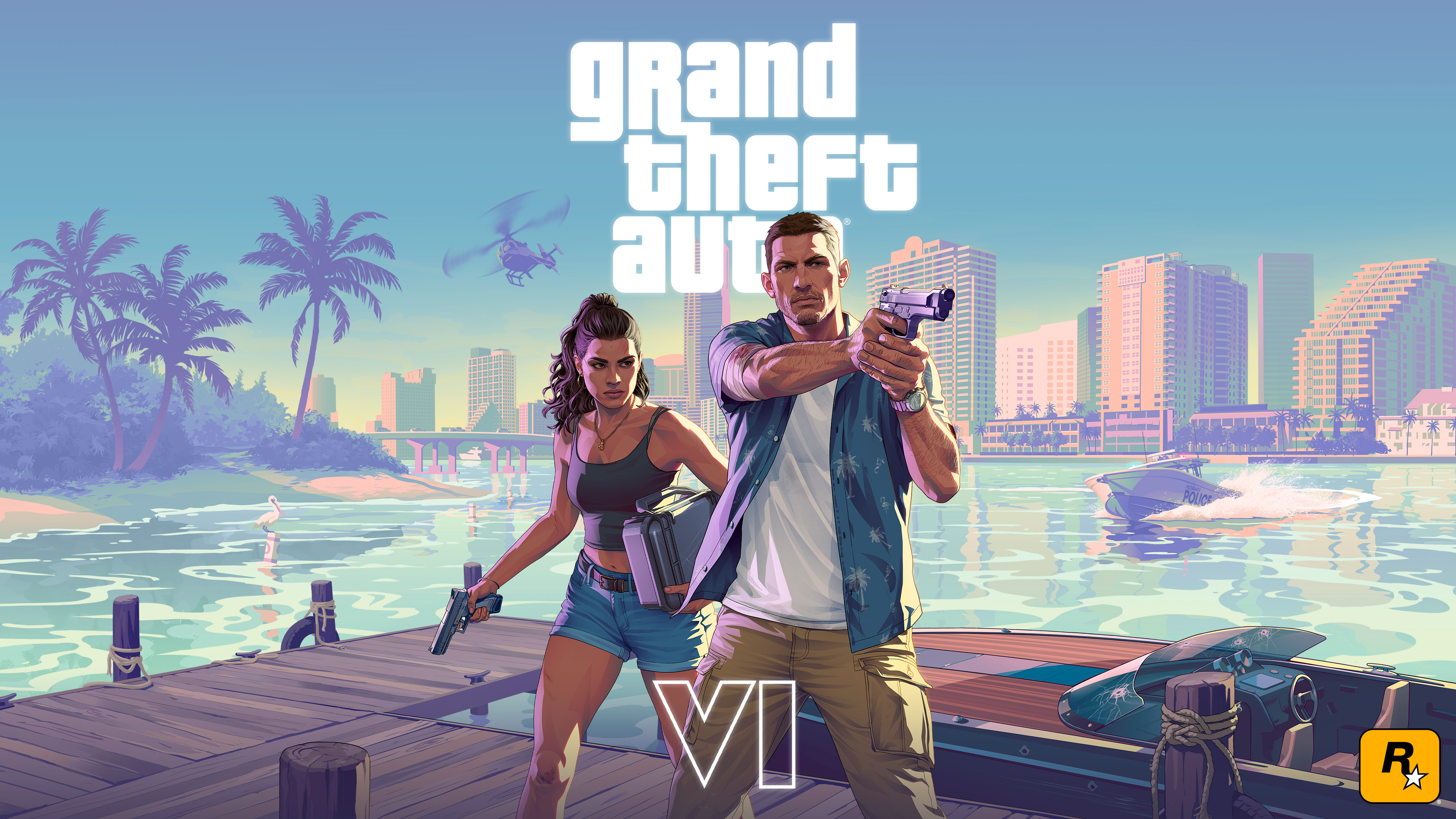
GamesGTA 6 lands November 19. The drip-feed continues to work.
Rockstar dropped a 32-second clip on June 18 with cover art, a pre-order date, and a release date. That was the gaming news of the week.
-
 Games
GamesWhat is actually going on with War Thunder
There is an active argument between War Thunder players, content creators, and Gaijin Entertainment. The argument has multiple threads and a long history. Here is what is actually in it.